


National Mirror · Year end Observation | Tanzania Zambia Railway Revitalizes and Upgrades, Bringing Together the Development Efforts of China and Africa
Dar es Salaam/Maputo, December 23 (Xinhua) -- At Dar es Salaam Central Station in Tanzania, the station building built in the 1970s still maintains its old appearance, with old-fashioned diesel locomotives parked next to the platform. Many locomotives have exceeded their design lifespan and can only rely on dismantling old parts to maintain operation. How to revitalize a railway that has been running for nearly half a century? A systematic action is quietly unfolding.
On the tracks of the new Kapirim Poxi station in Zambia's Central Province, workers use tools such as socket wrenches and pry bars to remove rail fasteners and spikes one by one, and move the tracks away. Engineer Stanley Simushi told reporters, "We are replacing new sleepers for a section of track inside the station
In November of this year, the Tanzania Zambia Railway activation project entered the comprehensive construction phase. Soon, this path of friendship between China and Africa, which carries historical glory, will be revitalized and put back into use, continuing to write a new chapter of cooperation and win-win outcomes.
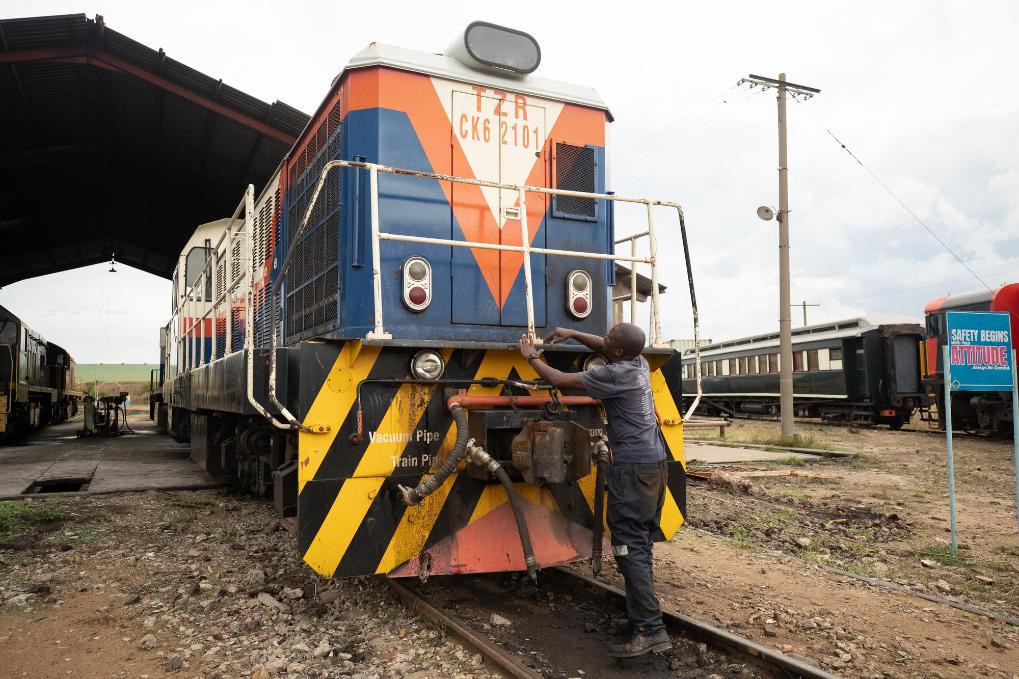
On November 14th, at the New Kapirim Poxi Station in Zambia's Central Province, train driver Jackson Masses closed the doors of his locomotive. Photo by Peng Lijun, Xinhua News Agency reporter
Building a benchmark for high-quality co construction
The total length of the Tanzania Zambia Railway is 1860.5 kilometers, starting from the port city of Dar es Salaam in Tanzania in the east and ending at New Kapirim Poxi in Zambia in the west. It was built with interest free loans provided by the Chinese government. In July 1976, this railway was officially handed over to the governments of Tanzania and Zambia for operation.
The Tanzan Railway was jointly created by the older generation of leaders from the three countries, carrying profound friendship and common pursuit, and is known as the "Road of Freedom" and "Road of Friendship". Under extremely difficult conditions at that time, China dispatched tens of thousands of engineering personnel, and hundreds of builders from China, Tanzania, and Zambia sacrificed their lives for it. For Tanzania and Zambia, it is not only a gateway to the sea, but also a symbol of national independence and regional mutual assistance.
Over the past 49 years of operation, the Tanzania Zambia Railway has transported more than 30 million tons of goods and over 40 million passengers, becoming a "major artery" that ensures the economic operation of Tanzania Zambia and neighboring countries. In recent years, even with limited capacity and reduced schedules, the Tanzan Railway has continued to play a role in serving people's livelihoods. It is not only the daily travel choice of the people along the route, but also the gathering of food vendors, porters, grocery stalls, and repair shops near small and medium-sized stations, forming the local micro economic ecology.
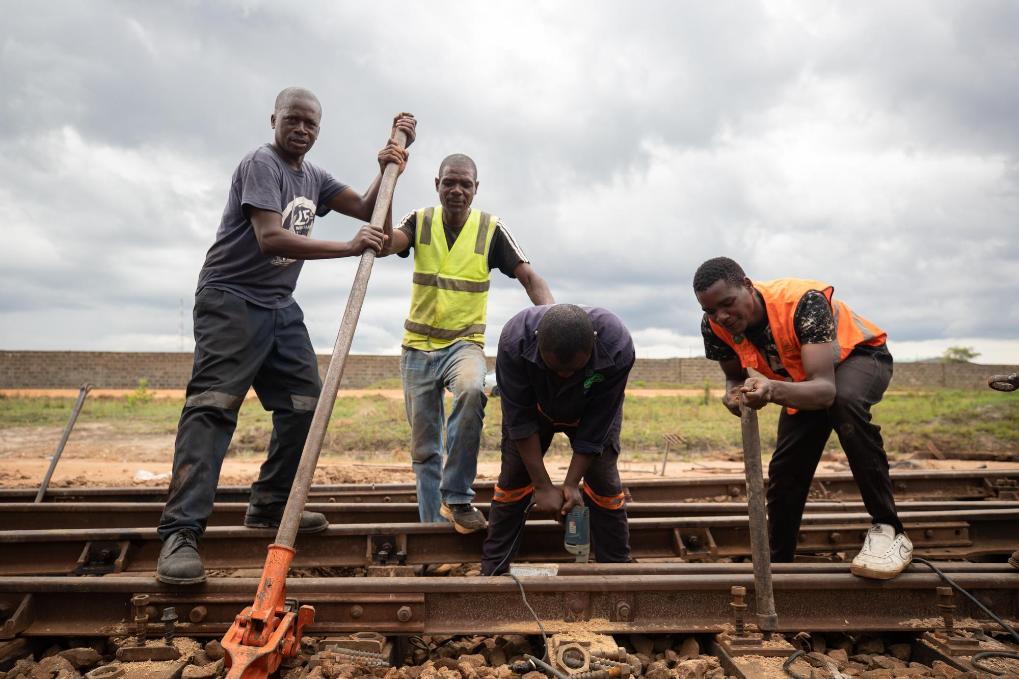
On November 14th, at the New Kapirim Poxi Station in Zambia's Central Province, TAZARA railway workers replaced sleepers. Photo by Peng Lijun, Xinhua News Agency reporter
In recent years, factors such as aging equipment and outdated management mechanisms have limited the freight capacity of the Tanzania Zambia Railway, while regional economic development and logistics demand are increasingly growing. In this context, the modernization of the Tanzan Railway has been put on the agenda. In 2024, China, Tanzania, and Zambia launched preliminary research on the systematic upgrade of the railway system, planning to upgrade the entire chain in terms of track, signal, traction power supply, vehicles, etc., making the Tanzania Zambia railway a long-term stable overseas corridor facing the Indian Ocean
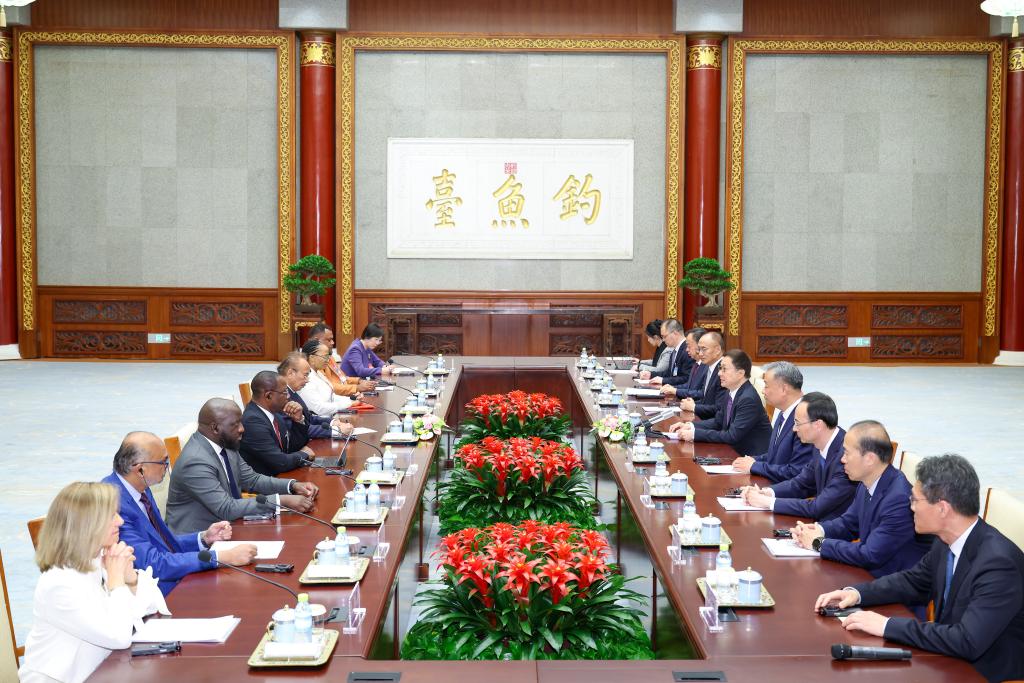
Li Qiang pointed out that China will work with Tanzania and Zambia to build the project into a high-quality, efficient, safe and reliable boutique project, set a benchmark for high-quality joint construction of the "the Belt and Road", and take this opportunity to promote "hard connectivity" of railway, highway, port and other infrastructure, strengthen "soft connectivity" in customs, commodity inspection, taxation and other fields, constantly improve the level of trade and investment facilitation, and promote the integration and docking of markets and industries between China, Tanzania and Zambia, and between China and Africa.
At a recent event on the Tanzania Zambia Railway held at the National Museum of Tanzania, the reporter met with 73 year old Soromon Mwakasanga, a retired worker who had participated in railway construction. He bluntly stated that the aging and low speed of railways have affected the regional freight capacity, and many shippers have to turn to higher cost road transportation. He has high hopes for the railway activation project: "After the railway upgrade, young people will have jobs, farmers will be able to sell goods, and enterprises will dare to invest. It is not only a railway, but also the future

On November 26th, in Dar es Salaam, Tanzania, retired employees of the Tanzania Zambia Railway took a group photo at the "Friends on the Same Road - Tanzania Zambia Railway Painting Exhibition". Xinhua News Agency (Photo by Hermann Emanuel)
Injecting new momentum into development
The logistics costs in Africa are much higher than the world average, and there is a significant investment gap in the infrastructure sector. The activation project of the Tanzania Zambia Railway will help Africa make up for its infrastructure deficit, improve overall transportation capacity, and reduce the cost of mineral exports for inland countries, promoting Africa's closer integration into the global economy.
With the advancement of the activation project, the freight capacity of the Tanzania Zambia Railway is expected to increase to 2.4 million tons per year, and the transportation time of goods may be shortened by nearly two-thirds.
Moreover, according to the joint statement of the three countries, China, Tanzania, and Zambia will work together to promote the construction of the Tanzania Zambia Railway Prosperity Belt, unleash regional development potential, assist in the industrialization and agricultural modernization of Tanzania and Zambia, and improve the well-being of the people along the route.
Professor Wilson Neves from the Catholic University of Angola stated that as African countries steadily advance regional integration, "Africa hopes to strengthen cooperation with the outside world in industry, technology, employment, and capacity building. In his view, under a mutually beneficial partnership, the transformation of transportation arteries is not only about enhancing logistics capabilities, but also has the potential to lead regional economic development onto the fast lane.
Wang Jinjie, Deputy Secretary General of the African Studies Center at Peking University, pointed out that China Africa infrastructure cooperation is transitioning from "heavy construction" to "heavy operation, heavy governance, and heavy sustainability". The transition from aid projects to jointly operated economic corridors is not only related to whether the Tanzania Zambia Railway can be used for a long time, but also to whether the future cooperation model between China and Africa in related fields can be iteratively upgraded.
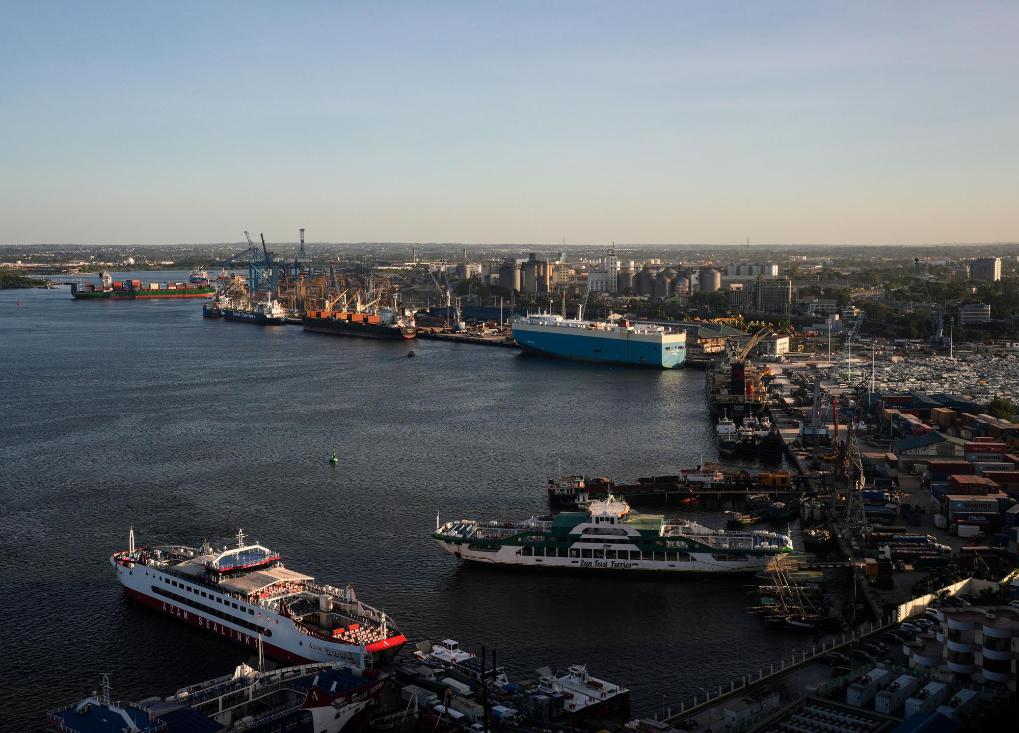
This is the Dar es Salaam Port captured on November 17th in Dar es Salaam, Tanzania. Photo by Xinhua News Agency reporter Li Yahui
In this renovation, the three parties plan and layout logistics hubs and industrial parks along the Tanzan Railway, combining processing and manufacturing, agricultural cold chain, warehousing, and various productive services to drive the development of the surrounding areas. At the same time, in order to ensure the commercial and sustainable operation of railways, training centers, vocational education projects, and modern corporate governance and regulatory frameworks are also established as supporting facilities.
Humphrey Moshi, Director of the China Studies Center at the University of Dar es Salaam, said in an interview with reporters that the modernization of the Tanzania Zambia Railway is not a general project upgrade, but a strategic repositioning in the context of the accelerated evolution of the East African and even the entire African continent. He stated that the Tanzania Zambia Railway has a long history, won the hearts of the people, has a relatively complete industrial chain along the route, and can form links with other Chinese projects in East Africa. This economic corridor has broad prospects and is expected to become the main axis of manufacturing and trade in East Africa in the future.
Mohi said that Tanzania hopes to become a regional hub again, Zambia hopes to reduce logistics costs and improve export stability, and China hopes to gather greater development synergy with Africa. "The three parties have highly consistent goals, which is the biggest prospect and confidence of modernizing the Tanzania Zambia railway.
Editor: Chen Luyi
Related articles
-
China Focus: Chinese polar icebreaker returns home after fruitful Antarctic research outcomes
-

China launches new internet satellite group
-

"China-Brazil Cultural Year" concert opens in Brasilia, Brazil
-

Deeply cultivating new materials of fiberglass and empowering global infrastructure - a documentary on the innovative development of Hebei Yaogu Technology Co., Ltd
-

Chinese medical team supports post-disaster efforts in Federated States of Micronesia
-

Chinese designs in Milan feature blending, reinterpreting, innovating
-

Across China: International journalists explore economic vitality in coastal China
-
China willing to advance global community of shared development with all parties: vice president